



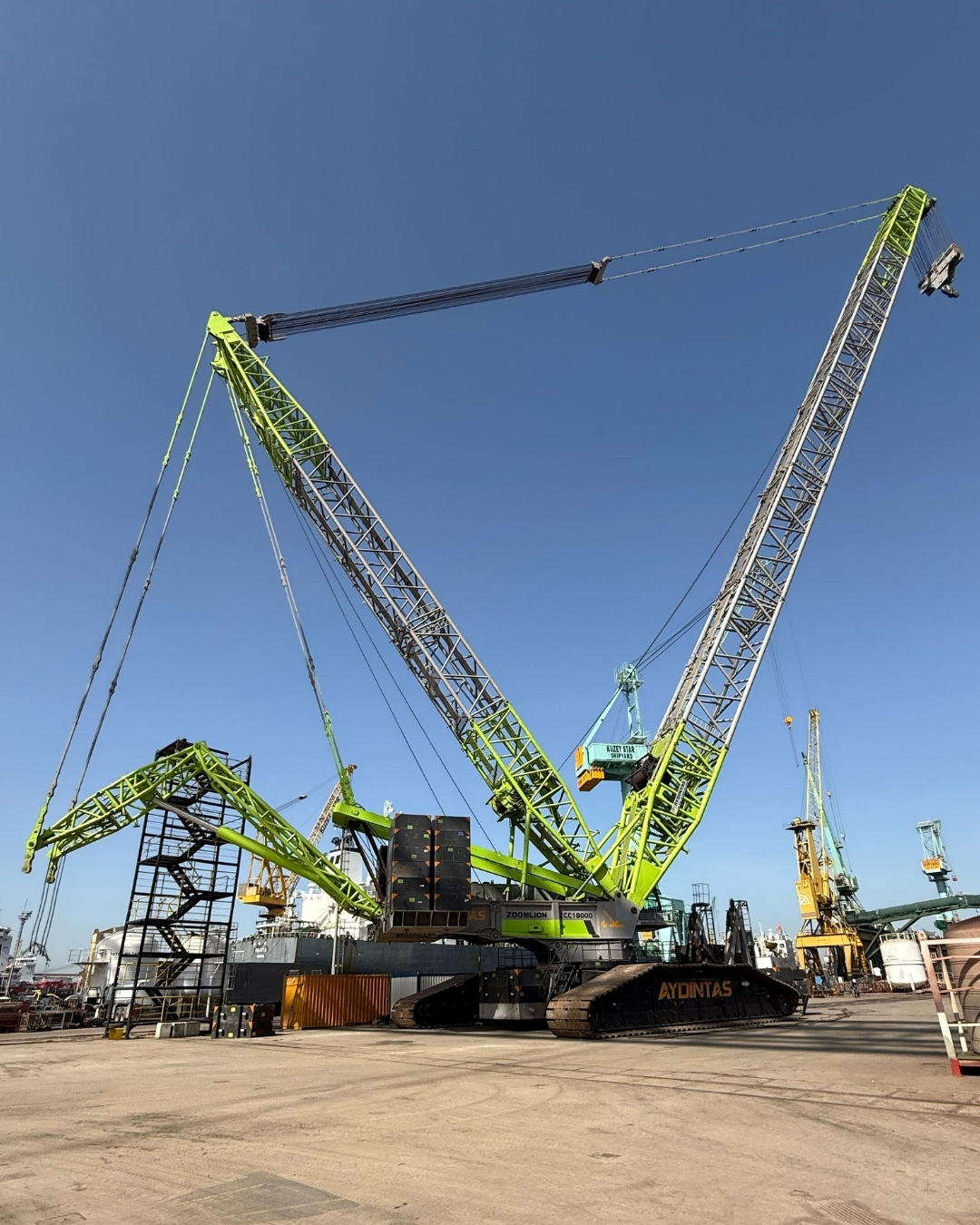
5 Critical Factors You Need to Know When Choosing a Crane
In the construction, industrial, energy, and logistics sectors, heavy lifting and transport operations become much safer and more efficient if you choose the right equipment. However, choosing the right crane is not limited to capacity alone; project requirements, ground conditions, safety standards, and financial circumstances also play a crucial role in the decision-making process.
In this article, we explain the critical factors you must consider when renting or purchasing a crane, with the expertise of Aydıntaş.
🔹 1. Load Weight and Lifting Capacity
The most important factor in crane selection is the weight and dimensions of the load to be lifted.
- The maximum load weight and lifting height must be calculated precisely.
- Technical details such as working angle, boom length, radius and load center must be taken into account.
- Choosing a crane with insufficient capacity for the project poses a safety risk.
✅ Tip: Always choose a crane with 10–20% higher capacity than the requirement.
🔹 2. Working Area and Ground Conditions
The type of crane to be used in the project should be determined according to the physical conditions of the site.
- Mobile or truck-mounted cranes may be preferred in narrow spaces.
- Crawler cranes are safer on soft or uneven ground.
- Ground bearing capacity and slope must always be examined.
✅ Tip: Plates or supporting equipment to be placed on the ground may be required for crane installation.
🔹 3. Project Duration and Work Schedule
For short-term projects, mobile cranes are more suitable, while crawler cranes are preferable for long-term and heavy projects.
- Assembly time and crane mobility directly affect the project timeline.
- In tight project schedules, quick and practical assembly becomes a priority.
🔹 4. Safety Standards and Certification
Crane selection must consider occupational safety standards and equipment documentation.
- CE certification, periodic maintenance reports, and operator certificates must be checked.
- Working at height and heavy lifting procedures must be applied, relevant documentation of the operators, riggers and the crane must be checked.
Working only with certified equipment is both a legal requirement and reduces risks to the minimum.
🔹 5. Cost and Operational Efficiency
Price alone should not be the sole criterion. Crane capacity, fuel consumption, operator experience, and transportation costs should also be carefully considered.
- A higher-capacity crane may complete the job faster and safer, reducing the overall cost.
- Proper planning and correct crane selection minimize labor and time losses.
🔹 6. Operator Experience and Technical Support
No matter how powerful the crane is, without operator expertise and technical support, operations can still become risky.
- Experienced and certified operators minimize risks.
- Technical team support, lifting plans and engineering accelerates the process in case of unexpected breakdowns.
Choosing the right crane is critical for both safety and efficiency. By evaluating factors such as load capacity, ground conditions, project duration, safety standards, and technical support, you can select the most suitable solution.
📞 At Aydıntaş, with our expert team in heavy lifting and logistics, we provide tailored crane solutions for your projects. Contact us for safe, fast, and professional service.
