



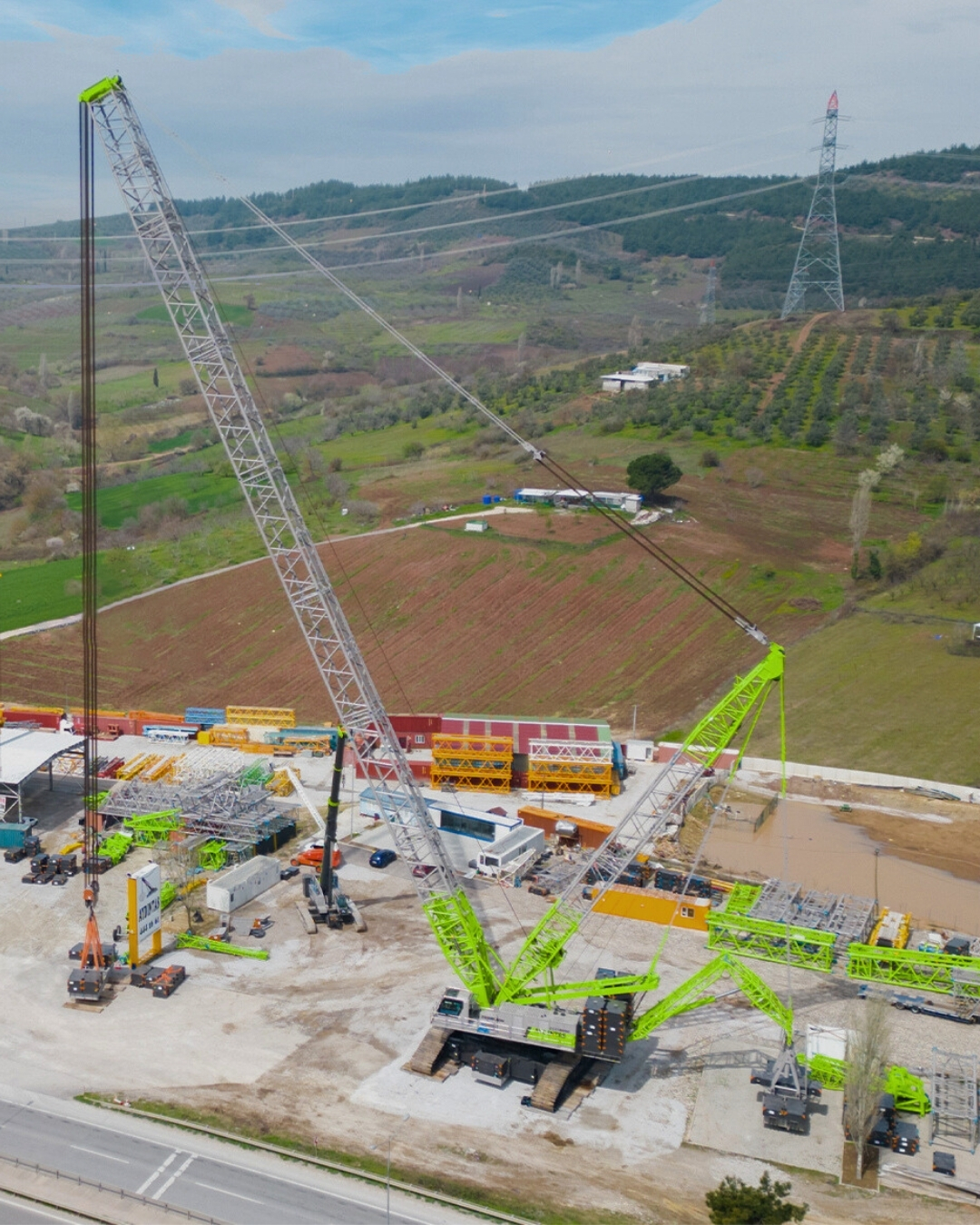
How to Create the Right Lifting Plan for Your Projects
In heavy lifting operations, success is not achieved solely with powerful cranes — it requires detailed site surveys, engineering drawings, and professional planning. The right lifting plan enhances safety, shortens operation time, and reduces costs. Here are the key steps to preparing the correct lifting plan for your projects:
🔹 1. Conduct a Detailed Site Survey
Before any lifting operation begins, a comprehensive on-site inspection must be carried out.
- Analyze ground structure, slope, and load-bearing capacity.
- Define loading/unloading areas and crane positions in advance.
- Identify potential obstacles within the site (power lines, building structures, etc.).
This initial survey plays a critical role in both crane selection and operational safety.
🔹 2. Engineering Drawings and Planning
A proper lifting plan is not limited to verbal instructions. Each project requires technical drawings and detailed planning.
- Prepare technical drawings that include the load’s center of gravity, lifting points, and crane angles.
- Use 3D modeling and simulations when necessary to visualize each step of the operation.
- Provide clear visual documentation to both site teams and clients, serving as a precise roadmap for execution.
🔹 3. Safety and Logistics Planning
The lifting steps defined in engineering drawings must be executed on-site in line with HSE standards:
- Plan equipment and crane mobilization to the site.
- Establish emergency scenarios and safety barriers.
- Integrate logistics workflows into the lifting plan to ensure faster, smoother operations.
Professional crane operations are never random — they succeed through careful site surveys, technical drawings, and precise engineering plans. At Aydıntaş, our expert team manages these processes end-to-end, ensuring your projects are executed safely, quickly, and efficiently.
